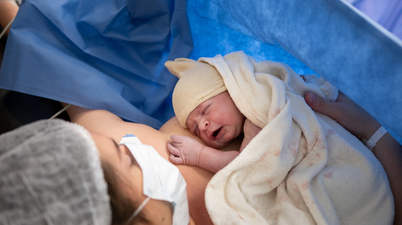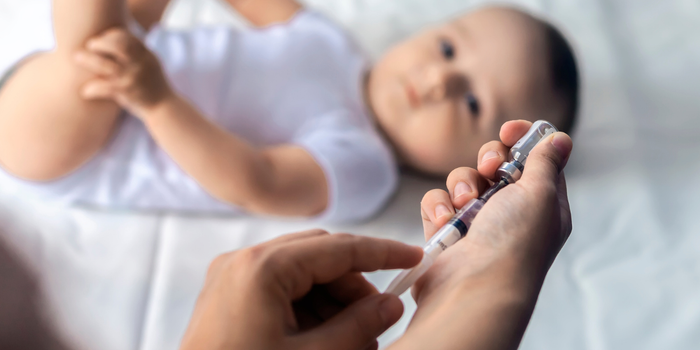
Parents of newborns are facing increasing confusion and concern following the introduction of the new RSV immunisation for infants
With eligibility restricted to certain newborns, many parents are being left scrambling for solutions, turning to pharmacists and GPs in the hope of purchasing the immunisation privately.
The confusion has been further compounded by significant changes to the Childhood Immunisation Schedule, according to Pharmacist and health podcaster Sheena Mitchell.
This includes the addition of a chickenpox vaccine, leaving parents uncertain about the timing and safety of these important injections.
Starting from October 1st, the chickenpox vaccine has been added to the Childhood Immunisation Schedule, while the RSV immunisation, available since September 1st, is offered to babies born within a narrow window.
Those who miss out on the chickenpox vaccine programme can still get it privately from pharmacists, administered in two doses, four weeks apart.
However, for the RSV immunisation, no private option exists for babies who were born too early to qualify, leaving parents frustrated and concerned.
RSV cases have surged in recent years, particularly following the Covid-19 pandemic.
Babies under 12 months are most vulnerable to RSV, especially during the peak season from September to March, due to their underdeveloped lungs.
The virus can cause severe respiratory distress, with almost 1,400 babies hospitalised last year alone – a stark contrast to the 180 hospitalisations for chickenpox during the same period.
Sheena Mitchell is among those questioning the limited rollout of the RSV immunisation.

“It’s basic maths, which is obviously not a strong point for this government,” she says.
“Our hospitals are already overwhelmed, and winter is approaching. Vaccinating more babies would reduce the pressure on hospitals and GPs.”
Mitchell pointed out that the National Immunisation Advisory Committee (NIAC) recommended the immunisation for all babies under 12 months, but the government failed to act in time to implement a comprehensive programme.
“Instead, they opted for what is being called the ‘Pathfinder Programme,’ which she says translates to “something is better than nothing.”
Australia’s recent experience offers a worrying glimpse of what might come. Healthcare workers there faced what they dubbed a ‘Flumonia’ crisis, as RSV, COVID, and flu combined to cause a surge in pneumonia cases, overwhelming hospitals.
Many fear a similar scenario unfolding this winter in Ireland, given the limited RSV immunisation coverage.
The frustration for parents is further heightened by the inability to purchase the RSV immunisation privately.
The reason for this really comes down to money, availability, and lack of organisation, according to Sheena.
- Money & Rollout: The Government could not afford to give the immunisation to all of the babies under 12-months this RSV season due to the cost of the antibodies coupled with the extra operational costs associated with the training and rollout of the programme beyond the maternity hospitals.
- Planning & Organisation: Choosing to go with just the first of NIAC’s series of recommendations regarding RSV immunisation and calling it a trial-run or ‘Pathfinder Programme’ allowed the Government to save face. The truth is that the Government did not consider NIAC recommendations in time to implement a comprehensive rollout programme which would require getting all of the GPs trained to provide the immunisation at the 2, 4 or 6-months childhood immunisation appointments. This is because the RSV immunisation is not a vaccination, it is an immunisation of readymade antibodies which must be transported and stored at a specific temperature.
- Stock: The last reason is supply. At the time the RSV immunisation treatments were ordered, the Government had first call on getting all of the necessary antibody supply made for Ireland. Now it is too late for a private healthcare business to order RSV immunisations given the lead time required to manufacture this highly advanced antibody treatment. Even our own Government could not order more RSV immunisations at this late stage.
Mitchell went on to say she is concerned that without broader coverage, many parents will face the heartache of watching their babies battle RSV.
“I really hope that in six months, I’m not sympathising with parents because they had to watch their child suffer,” she says.
“Our government needs to prioritise preventative healthcare spending to protect our most vulnerable.”
She is calling on the next government to implement a comprehensive RSV immunisation programme for all babies under 12 months by next year.
READ MORE:
- Eve’s dream to walk: Family raising vital funds for two-year-old’s stem cell therapy
- Union calls for action over ‘enormous’ issue of teacher shortage crisis in Ireland
- ‘It Takes a Village’ announce new partnership with the Triple P – Positive Parenting Program