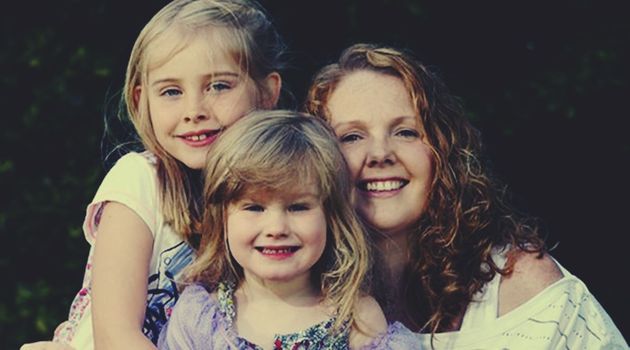
Louise Boyd is a mum-of-two from Co. Antrim. Her youngest daughter Sophie, aged four, was born with spina bifida and hydrocephalus.
Sophie can walk independently but is very unstable on her feet. She needs to use nappies and a catheter for bladder and bowel problems.
The family found out that Sophie had spina bifida at the 20 week scan and she underwent her first operation, one of many, when she was only four hours old.
She had a number of visits to the hospital in the early stages and now attends check-ups every year.
Louise, who also has a seven-year-old daughter called Amy, didn’t take folic acid initially but started taking it when she found out she was pregnant.
She tells us more about living with spina bifida…
How would you describe Sophie?
Sophie is a very lively, chatty little girl who is sociable and loves dressing up. She loves clothes and playing with her cousins and friends. She is very close with her big sister and they love to play together out in the garden or with dolls. She is extremely determined and knows exactly what she wants. And she isn’t afraid to tell you! She is a very loving little girl who enjoys company and really likes a laugh. Sophie attends mainstream school and is going into P1 (equivalent of Junior Infants) in September after having a really enjoyable nursery year.
Would you mind telling us a little bit about Sophie’s condition and how it has affected her?
Sophie has spina bifida, hydrocephalus and Arnold Chairi malformation. Although Sophie can walk, she has issues with mobility and balancing. She falls over quite a lot and has difficulty managing uneven ground as well as kerbs and steps. She can’t walk for long distances. She is also unable to climb, hop or skip and just recently managed jumping.
She has a shunt in her brain to drain the CSF (cerebrospinal fluid) into her abdomen as this is a job the spinal cord would normally do, but cannot with Sophie. We have to be on the look out for shunt blockages as this can have a devastating effect.
How did you feel when you first found out Sophie had the condition?
We first found out at the 20-week scan and although we had heard of spina bifida, we didn’t know what exactly that would mean for our child and our family. We were shocked I suppose, but after a complication with my first pregnancy, we were only glad it wasn’t life-threatening.
How has spina bifida affected your family in general?
All in all, I would say that having a child with spina bifida has had a positive impact on our family, although it is difficult when your child cannot do things that other children can do. In saying that, it has brought us a more positive perspective on life and what is important. Health and family are the most important things, anything else is a bonus. We have met some extraordinary people through our journey so far, from other families to health professionals to charity workers. It’s a real confirmation of the human spirit. Our eldest daughter Amy also has a very compassionate nature and is aware that people are not all the same and may have issues to contend with, some of which are not visible.
Would you have any advice for other women based on your own experience?
I would advise anyone who has had a spina bifida diagnosis to get in contact with SHINE as soon as they feel ready as they have been an invaluable support to us. Also, I’d tell them to try to contact other families who can share their experiences. More often than not, this will alleviate your worries. If you do have a spina bifida diagnosis of your baby – don’t panic, it is a long and winding road but a very rewarding one.
For women who are planning a family, or even those who are sexually active and at childbearing age, I’d say to ensure you take the recommended dose of folic acid daily from at least 3 months prior to becoming pregnant – or daily if not planning a pregnancy – in order to reduce the risk of neural tube defects.
Shine is a community of individuals in Northern Ireland, including families, friends, and professionals, sharing achievements, challenges and information on living with hydrocephalus, and/or spina bifida, and related issues.
For those living here in the Republic of Ireland, you can find more information about the condition, on the Spina Bifida Hydrocephalus Ireland website. For more information about folic acid, visit the safefood website.